A body fat calculator estimates the percentage of your total weight that is fat versus lean mass. It gives you a much clearer picture of your health than a standard scale. While weight alone doesn't distinguish between muscle and fat, tracking your body composition shows whether you're actually losing fat or just shedding water and muscle.
Scales can be incredibly frustrating. If you've ever spent weeks eating clean and lifting weights only to watch the scale stay exactly the same, you know the feeling. Did your efforts fail? Probably not. You likely built muscle while burning fat. That's where a reliable body fat calculator comes in. It helps you look past that single, stubborn number and see what your body is actually made of.
Last updated: September 12, 2026
Who is this Body Fat Calculator Actually For?
Let's be honest: you don't always need to track your body composition down to the decimal point. If you're just trying to move more and eat your vegetables, checking your weight and how your pants fit is usually plenty. But for specific goals, this tool is invaluable.
Take a lifter who is "cutting" or "bulking." When you cut calories to drop fat, your body naturally wants to burn some muscle for energy, too. Tracking your body fat percentage weekly lets you verify that the weight you're losing is actually fat, not hard-earned muscle. If your weight drops but your body fat percentage stays the same, your diet or training plan is likely eating away at your muscle mass.
This tool is also eye-opening for anyone who is "skinny fat." These are people who look thin and have a normal Body Mass Index (BMI), but carry a high proportion of fat relative to muscle. BMI often misclassifies them as healthy because it only looks at height and weight. Knowing your actual numbers helps you pivot your training toward building strength and gaining lean body mass, rather than trying to shrink yourself further with endless cardio.
Finally, older adults can use it to monitor sarcopenia—the natural loss of muscle tissue as we age. Keeping tabs on your muscle-to-fat ratio helps you maintain physical strength and metabolic health as you get older.
How the Calculation Works
This tool uses a formula developed by the U.S. Navy. Why the military? They needed a cheap, fast, and remarkably accurate way to screen thousands of personnel without buying expensive scanning equipment. The method compares your structural frame (your height and neck) to the areas where your body naturally stores fat (your waist and hips) to estimate your density.
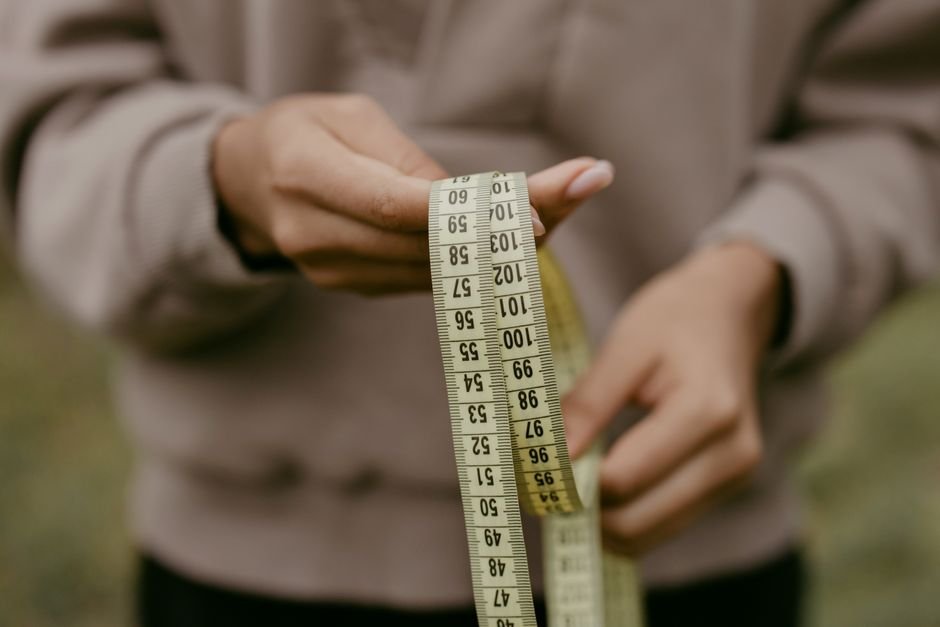
All you need is a flexible tape measure (the kind tailors use) and a few minutes. Here is how to get the most accurate results:
- Get the right tape: Use flexible vinyl or fabric. Avoid metal builder's tapes (they don't wrap around curves) and cheap plastic ones that stretch out over time.
- Measure your height and weight: Do this first thing in the morning before eating, wearing minimal clothing.
- For Men: Measure your neck (just below the Adam's apple, sloping slightly downward in front) and your waist (horizontally, right at the belly button).
- For Women: Measure your neck, your waist (at the narrowest point, usually just above the belly button), and your hips (at the widest part of your glutes).
- Input the numbers: Enter your measurements into the tool above to get your results instantly.
The Math Under the Hood: A Real-World Example
How does a simple tape measure tell you how much fat is on your frame? The US Navy body fat method uses logarithmic equations. Let's look at a quick example to see how the math works out.
Take Dave. He is 6 feet tall (72 inches), weighs 195 pounds, has a 15-inch neck, and a 36-inch waist. The Navy formula for men using inches looks like this:
Body Fat % = 86.010 * log10(Waist - Neck) - 70.041 * log10(Height) + 36.76
- First, subtract his neck from his waist: 36 - 15 = 21 inches.
- Next, find the base-10 logarithm of that difference: log10(21) is roughly 1.3222.
- Then, find the logarithm of his height: log10(72) is roughly 1.8573.
- Multiply these values by the constants in the formula: 86.010 * 1.3222 = 113.72, and 70.041 * 1.8573 = 130.09.
- Put it all together: 113.72 - 130.09 + 36.76 = 20.39%.
This means Dave's estimated body fat is 20.4%. From there, we can find his lean body mass. Since 20.4% of his 195-pound frame is fat (about 39.8 pounds), the remaining 155.2 pounds is lean mass—which includes muscle, bone, organs, and water.
Common Mistakes When Measuring Your Body
Even the best calculator will give you useless results if you feed it bad data. Small errors can easily throw the math off by several percentage points. Watch out for these common blunders when taking your measurements:
- Sucking in your stomach: It's tempting to pull your belly in, but doing so defeats the purpose. Stand naturally, exhale gently, and measure without squeezing the tape into your skin.
- Pulling the tape too tight: The tape should lie flat against your skin without digging in. If your skin is bunching up, you're pulling too hard.
- Measuring at the wrong times: Your body weight and water retention fluctuate constantly. Measuring after a salty meal or a heavy workout can cause sudden, artificial spikes. Stick to first thing in the morning on an empty stomach.
- Changing your measurement landmarks: If you measure your waist at your belly button this week but at your narrowest point next week, your data is useless. Pick a spot and stick to it every single time.
Honest Limitations of This Calculator
To be clear, no tape-measure-based tool can pinpoint your exact physical makeup down to the cell. It is an estimate. While it works incredibly well for the average person, it does have limitations.
For instance, if you're a lifter with an unusually thick neck, the formula might assume your frame is larger than it actually is, underestimating your fat percentage. Conversely, if you carry most of your fat in your limbs rather than your midsection, the Navy method might miss it because it focuses so heavily on the waist. Other options like calipers or bioelectrical impedance scales have their own flaws. Calipers require a lot of skill to use accurately, and electronic scales fluctuate based on how much water you drank an hour ago.
Because of these variables, treat your results as a reliable baseline to track progress rather than an absolute medical truth. If you need hyper-precise data, a professional DEXA scan or hydrostatic (underwater) weighing is your best bet.
Frequently Asked Questions
What is a healthy body fat percentage for men and women?
Healthy ranges vary by sex and age. For men, a typical healthy range is 10% to 20%, though competitive athletes might drop to 6% or 9%. For women, a healthy range is generally 20% to 30%, with athletes falling between 14% and 20%. Women naturally require more essential fat for hormonal and reproductive health.
How accurate is this body fat calculator compared to a DEXA scan?
For most people, a tape-measure-based body fat calculator using the Navy method is accurate to within 3% to 4% of a DEXA scan. While a DEXA scan is more precise, tape measurements are free, take two minutes at home, and are highly consistent if you measure yourself the same way every time.
Can you target fat loss in your stomach?
No. You cannot target fat loss in specific areas. This is a myth known as spot reduction. When you eat in a calorie deficit, your body burns fat from across your entire frame based on your genetics. The calculator is simply a tool to track your overall progress as you lean out.
Why did my calculated body fat go up when I lost weight?
If you lose weight too quickly through crash dieting, you might be losing muscle instead of fat. When you lose muscle, your relative percentage of fat can actually go up, even if the scale goes down. This is why gradual weight loss and strength training are so important for preserving muscle.
How often should I check my body fat percentage?
Checking too often will only drive you crazy. Real changes in muscle and fat take time to show up on a tape measure. Measuring once every two to four weeks is ideal. It lets you track meaningful progress without getting bogged down by daily water fluctuations.
Tracking your composition is about the big picture. Don't stress over a single day's measurement or minor shifts. Focus on the trend. By using this tool consistently, you'll gather the data you need to make smart decisions about your nutrition and training. Grab your tape measure, log your numbers, and start tracking what actually matters.