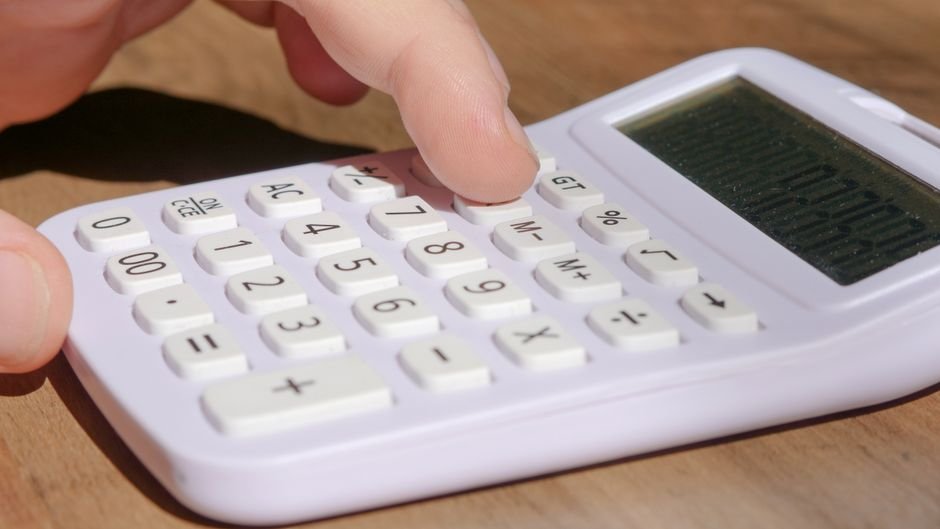
A Gematria Calculator is an online tool that assigns numerical values to letters based on ancient alphanumeric systems. It allows you to calculate the sum of words or phrases to find symbolic connections or hidden patterns in text.
Ever wonder why certain words seem to share a deeper, unseen link? People have been looking for patterns in text for thousands of years, and this Gematria Calculator makes that process instant. Instead of spending hours with a pen and paper, you can type in any name, sentence, or concept and see the math behind it in seconds. Whether you are curious about historical texts, interested in linguistics, or just looking to see how your own name adds up, this tool handles the heavy lifting for you.
Last updated: September 11, 2026
Who Uses a Gematria Calculator?
You might be surprised by the variety of people who find value in this. It isn't just for history buffs or scholars. Writers often use these calculations to find thematic links in their fiction, ensuring that names or locations have a hidden resonance for attentive readers. Similarly, people interested in numerology or the historical study of Hebrew and Greek texts use these tools to perform rapid comparative analysis.
If you enjoy word puzzles or cryptograms, you will find that a Gematria Calculator is a great way to verify patterns. It turns the subjective act of looking for "meaning" into an objective mathematical result. If you have ever suspected that two different words might be related by their internal structure, this is the quickest way to put that theory to the test.
How the Calculation Works
At its core, this system relies on the idea that every letter of the alphabet has a corresponding number. When you use the tool, it breaks down your input word by word and letter by letter. It then looks up the assigned value for each character based on the specific cipher you have selected—like the standard Hebrew Gematria or the simple English ordinal cipher—and adds them together to provide a final total.
Here is how to get the most out of the tool:
- Pick your cipher: Different traditions have different letter-to-number mappings. If you are looking for simple patterns, the English ordinal (A=1, B=2, C=3) is the most straightforward.
- Enter your text: Type in the word or phrase you want to analyze. Keep it focused; long sentences often lead to very high, less meaningful totals.
- Review the breakdown: Most versions of this tool will show you not just the final total, but the value of each individual letter so you can double-check the math.
- Compare results: Once you have a number for one phrase, try running a second phrase to see if they match or share a significant relationship.
A Real-World Example
Let’s look at a simple example using the English ordinal cipher, where A=1, B=2, and so on. Suppose you want to find the value of the word "CAT."
The math is simple:
- C is the 3rd letter of the alphabet (3).
- A is the 1st letter (1).
- T is the 20th letter (20).
- 3 + 1 + 20 = 24.
The Gematria Calculator will show you a total of 24. If you were comparing this to another word, say "DOG," you would perform the same steps: D (4) + O (15) + G (7) = 26. Since 24 and 26 are close, some might look for further context, but the math itself remains an objective, repeatable fact.
The Logic Behind the Math
Before computers, scholars had to memorize complex tables to perform these calculations. The "English Ordinal" is the simplest form, but you will often see references to other methods like "Reverse Gematria" or "ASCII value" systems.
The logic is essentially a substitution cipher. You are replacing letters with integers. When you perform this manually, you write your word on a piece of paper, write the corresponding number beneath each letter, and sum them up. The benefit of using a digital Gematria Calculator is that the speed is instantaneous. Human error in addition is common when working with long phrases; a character counter tool can help you verify the length of your input, and a calculator eliminates that risk entirely.
Common Mistakes to Avoid
One of the biggest errors people make is mixing up ciphers. If you calculate one word using the standard Jewish Gematria and another using a simple English ordinal, the numbers will never correlate. It is like trying to measure the height of a wall in inches and then comparing it to a measurement in centimeters without converting first.
Another mistake is ignoring spaces and punctuation. Depending on the settings you choose, the calculator might include the value of a space or a comma, which will throw off your total. Always ensure your settings match your research goals. If you are comparing two names, keep the formatting identical for both to ensure a fair comparison.
Limitations and When to Seek Expert Advice
Understand that a Gematria Calculator provides mathematical data, not absolute truth. If you are conducting academic research on ancient manuscripts, this tool is a starting point, not an end. Academic linguists use specific, rigorous methodologies that go far beyond simple arithmetic.
If your interest is purely for entertainment or artistic inspiration, the tool is perfect. However, if you are attempting to interpret historical or religious documents, do not rely solely on a web tool. These texts often contain complex grammatical nuances, archaic spellings, and context-dependent meanings that a standard calculator cannot interpret. In those cases, consult peer-reviewed books or reach out to experts in the field of linguistics.
Frequently Asked Questions
Does the Gematria Calculator use the same system for every language?
No. Different languages have different alphabets and historical traditions. A calculator built for English will not yield meaningful results for Hebrew or Greek using those languages' native systems.
What is the difference between Gematria and Numerology?
Gematria specifically refers to the practice of assigning numbers to letters within a language to find connections. Numerology is a broader, often more mystical practice that assigns numbers to people or events based on dates and other non-textual factors.
Can I use this tool to predict the future?
No. This tool is for linguistic analysis and pattern recognition. There is no mathematical or scientific evidence that these calculations can predict future events.
Why do my results change when I change the cipher?
Each cipher uses a different rule for assigning values to letters. For example, in an ordinal cipher, A=1, but in other systems, A might be assigned a much higher value. The total changes because the underlying math rules change.
Is there a "correct" way to use a calculator?
The "correct" way depends on your objective. If you are studying a specific historical text, use the cipher that matches the tradition of that text. If you are just experimenting, be consistent with your chosen method so your comparisons are accurate.
Does this work as a Hebrew/Jewish gematria calculator?
Yes - select "Jewish Gematria" from the cipher dropdown to use that letter-value system, which is the one most commonly meant by "Hebrew gematria" in English-language tools.
What's the difference between Full Reduction and Prime Gematria?
Full Reduction collapses each letter's value down to a single digit (1-9) before adding, while Prime Gematria assigns each letter a prime number instead of a simple ordinal value. Both are alternate ciphers in the dropdown above, alongside the standard English Ordinal method.
Is this the same as a numerology calculator?
They overlap but aren't identical. A numerology calculator usually works with names and birth dates to produce a single "life path" style number, while a gematria calculator is strictly letter-to-number math on any word or phrase you type in - no birth date required.
Can I use this as a name numerology calculator?
Yes, informally - type a name into the box and the ordinal or reduction cipher will give you a number some people treat as a numerology value. Just keep in mind that traditional numerology name-charts often use their own specific letter-value system, which may differ slightly from the ciphers offered here.
Final Thoughts
Don't get too caught up in trying to force meaning where it doesn't exist. The most interesting patterns are usually the ones that show up without you having to stretch the math. Use the tool to explore, compare, and observe, but remember that the numbers are just a different way of looking at the alphabet. If you need to perform other types of math, such as calculating an average of multiple Gematria results, our other tools are available to assist.