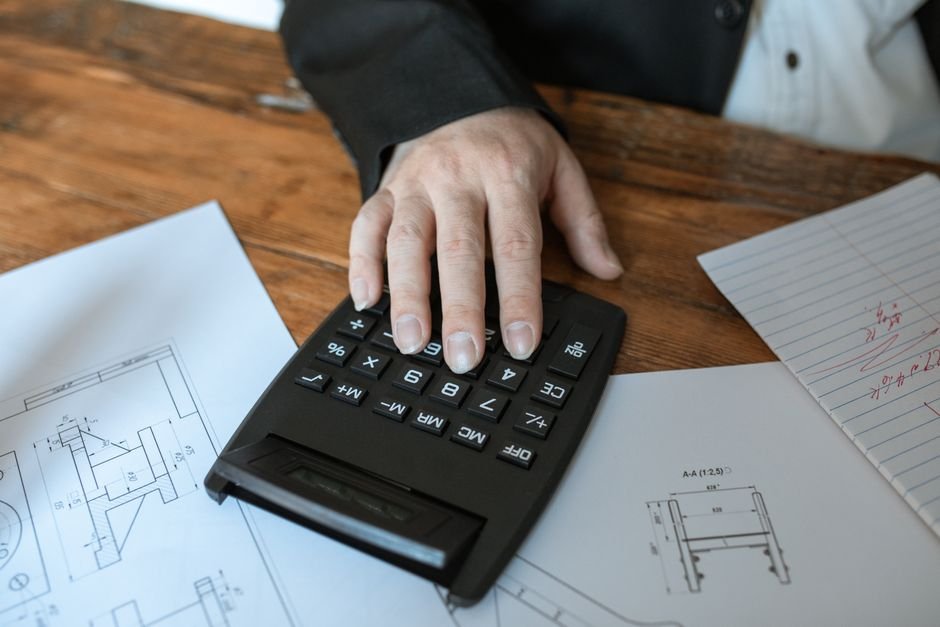
An inflation calculator helps you determine how the purchasing power of a specific amount of money changes over time by adjusting for historical price increases. You simply enter a starting dollar amount, the initial year, and the final year to see what that same value is worth today.
Most of us have heard a grandparent say, "I bought a movie ticket for a nickel back in my day." It is easy to feel like things were just cheaper then, but you are actually witnessing the erosion of purchasing power. Using an inflation calculator allows you to strip away the confusion of rising prices and see the true value of money across different decades. Whether you are trying to understand if your salary has kept pace with the cost of living or you are curious about the real cost of a historical purchase, this tool bridges the gap between then and now.
Last updated: September 16, 2026
Why You Need an Inflation Calculator
This tool isn't just for economists. It serves practical needs for anyone managing personal finances. If you are negotiating a salary, you might wonder if a raise is actually keeping you ahead or just helping you tread water. By checking the value of your pay from three years ago versus today, you can see if your real income has grown or shrunk.
Investors also rely on these numbers. If you put money into a savings account ten years ago and it grew by 10%, but inflation during that same period was 25%, you haven't actually made a profit in terms of buying power. You have lost value. Knowing how to use an inflation calculator helps you make better decisions about where to keep your money so you don't accidentally lose ground.
How to Use This Tool
You don't need a degree in finance to get accurate results. The tool works by pulling historical Consumer Price Index (CPI) data, which tracks the average change over time in the prices paid by urban consumers for a market basket of goods and services.
Follow these steps to get a clear answer:
- Pick your starting point: Identify the specific year you want to measure from, such as the year you started your first job or when a specific item was purchased.
- Enter the amount: Type in the original dollar figure.
- Select the target year: Choose the current year or any specific year you want to compare against to see how much that money would be worth in that time frame.
- View the result: The tool will generate the adjusted total, showing you exactly how much money you would need in the second year to match the buying power of the first.
A Real-World Example
Let’s look at a concrete scenario. Imagine your grandfather bought a mountain bike in 1990 for $500. You might wonder what that bike would cost in 2024 money.
Using the average inflation rate, $500 in 1990 has the same purchasing power as approximately $1,200 in 2024. The math works like this: the price index in 1990 was about 130, and the index in 2024 is roughly 312. You divide the target year index by the starting year index (312 / 130 = 2.4) and multiply that by the original $500. This tells you that for a bike to feel as expensive as that one did in 1990, it would need to retail for $1,200 today. If you find a bike for $800, you are getting a better deal than your grandfather did, even though the number on the price tag is higher.
Understanding the Math Behind the Tool
When you use an inflation calculator, you are performing a ratio calculation based on government-reported data. The formula is:
Current Value = Original Value × (CPI of Target Year / CPI of Starting Year)
The Consumer Price Index acts as the anchor. Government agencies track thousands of items—from milk and bread to rent and gasoline—to create this index. Because prices do not rise at the same rate for everyone, the CPI provides a weighted average. It is not a perfect reflection of your personal spending habits, but it is the most reliable way to compare the general cost of living across time.
Common Mistakes to Avoid
One of the biggest errors people make is assuming that the official inflation rate applies perfectly to their personal life. If you live in a rural area, your housing costs might be significantly lower than the national average, meaning your personal inflation might be lower than what an inflation calculator suggests.
Another mistake is forgetting about lifestyle creep. People often compare their current salary to their income from five years ago without accounting for the fact that their job title or skills have changed. Always separate salary growth from cost-of-living adjustments. Finally, do not confuse nominal gains with real gains. A 3% return on an investment in a year where inflation is 4% means you are losing purchasing power, even if your account balance is higher.
Important Limitations
While this tool provides a helpful estimate, it is not a precise accounting of your specific financial situation. It relies on national averages, which means it cannot account for:
- Regional variations: Costs in New York City differ from costs in rural Nebraska.
- Personal spending habits: If you don't own a car, the rising price of gasoline will not affect you as much as someone with a long commute.
- Quality improvements: A car from 1980 and a car from 2024 are fundamentally different machines. The price difference often reflects better safety features and technology, not just inflation.
If you are making major life decisions, like planning for retirement or determining a legal settlement, use these figures as a starting point. For high-stakes financial planning, consult with a tax professional or a certified financial planner who can account for your specific tax bracket and local economic conditions.
Frequently Asked Questions
How does an inflation calculator determine the value of money?
It uses the Consumer Price Index (CPI) to calculate how much the average cost of a basket of goods has risen between your chosen start date and end date.
Is there a difference between nominal value and real value?
Yes, nominal value is the face value of money, while real value is the purchasing power of that money after adjusting for inflation using an inflation calculator.
Can this tool tell me how much I should be paid today compared to 10 years ago?
It can tell you the amount required to maintain the same purchasing power, but it cannot account for career growth, raises, or changes in your industry's pay standards.
Why do some inflation calculators show slightly different results?
Different tools might use different base years for the CPI or pull data from different government agencies, which can cause minor variations in the final calculation.
Does this tool account for taxes?
No, an inflation calculator only measures the change in the price of goods and services; it does not factor in changes to income tax rates or other government deductions.
Keeping an eye on these trends is a smart way to stay grounded in your financial planning. By understanding how the value of your money shifts over the years, you can make better choices about your savings and your future.